


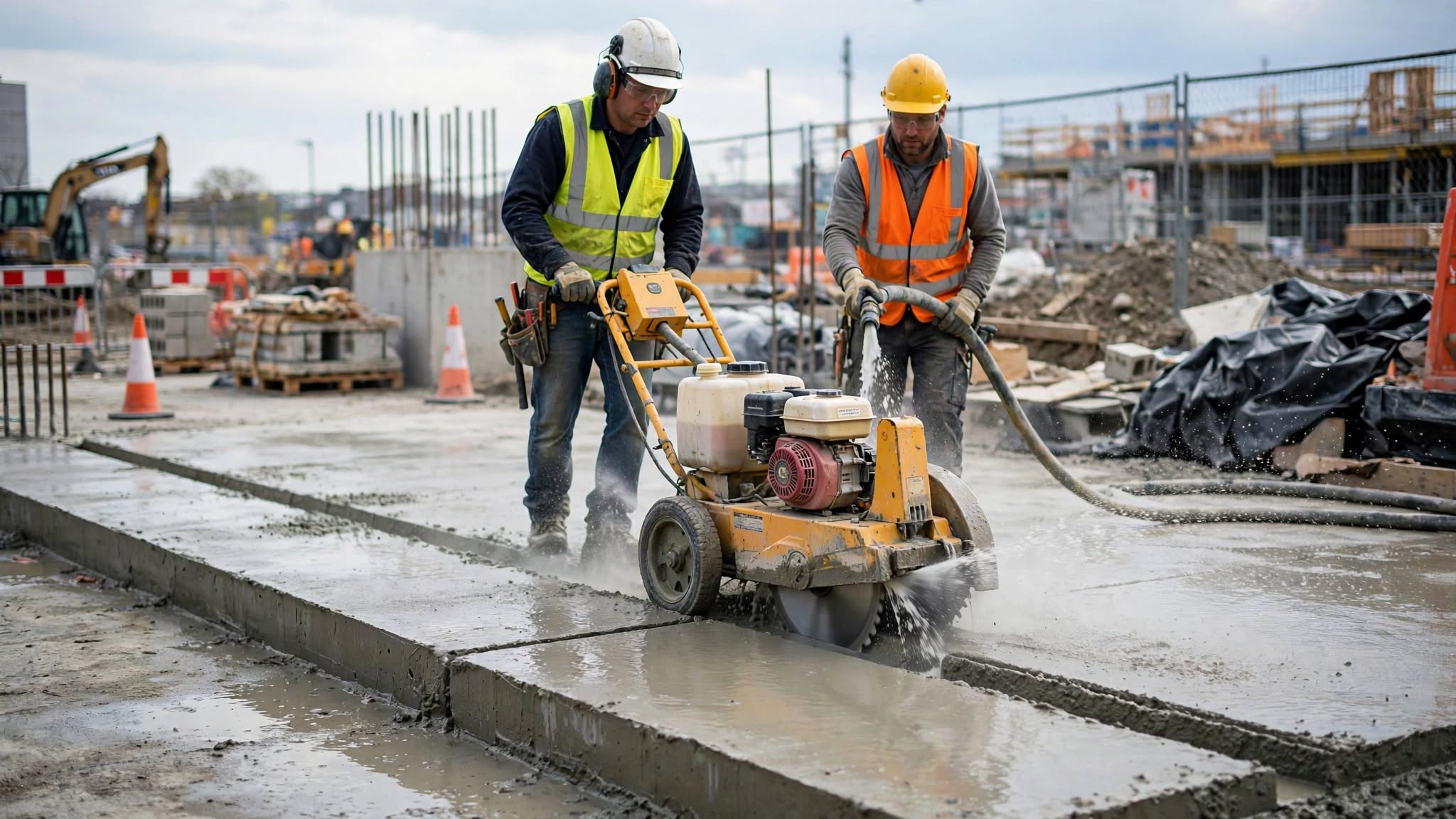
Concrete is designed to be strong and permanent, but construction projects often require parts of it to be removed, reshaped, or opened. A new doorway may need to be added to an existing wall, plumbing may need to pass through a slab, or damaged pavement may need to be removed without disturbing the surrounding surface. This is where concrete cutting becomes necessary.
Concrete cutting is a controlled method of cutting through concrete, reinforced concrete, masonry, and similar materials using specialized equipment. Unlike uncontrolled demolition, it allows workers to create planned openings, straight cuts, joints, and removal sections while limiting unnecessary damage to the remaining structure.
Concrete cutting refers to using specialized saws, blades, drills, and related equipment to cut concrete to specific dimensions. Most modern concrete cutting tools use diamond-tipped blades because they can work effectively on dense construction materials.
The exact technique depends on the structure, concrete thickness, reinforcement, access to the work area, and the type of opening required. Cutting a shallow control joint in a floor, for example, involves a very different process from creating a large opening in a reinforced concrete wall.
Concrete cutting can be performed during new construction, renovation, repair, utility installation, and selective demolition.
Different projects require different cutting techniques. Choosing an appropriate method helps create accurate cuts while reducing unnecessary removal.
Slab sawing, sometimes called flat sawing, is commonly used on horizontal concrete surfaces. A saw travels across the surface while its blade cuts into the concrete.
This method is useful for floors, roads, sidewalks, parking areas, and concrete slabs. Contractors may use it to remove damaged sections, create trenches for utilities, or prepare sections of flooring for modification.
Wall sawing is designed for vertical or steep concrete surfaces. The cutting equipment is typically mounted on a track, allowing the blade to move along a controlled path.
It is often used to create openings for doors, windows, ventilation systems, and building services. Wall sawing can also be useful when an existing opening needs to be enlarged during renovation.
Some concrete sections are too large, thick, or difficult to access with conventional circular saws. Wire sawing uses a diamond-coated wire that travels around or through the material being cut.
This technique can handle large structural sections and unusual shapes where standard cutting equipment may not be practical.
Core drilling creates clean, circular openings in concrete. It is commonly used when pipes, electrical conduits, cables, drainage lines, HVAC services, or other building systems need to pass through concrete.
Although drilling differs from straight-line sawing, it is closely related to concrete cutting and is frequently used alongside other cutting methods on construction sites.
Concrete cutting becomes necessary whenever an existing concrete element needs a controlled change rather than complete demolition.
During building renovations, walls may need new doorways or window openings. Commercial spaces may require modifications for electrical, plumbing, fire protection, or ventilation systems. Concrete floors can also require openings or trenches when new utility lines are installed below the surface.
Road and pavement work is another common application. Instead of removing an entire slab or pavement section, workers can cut around the damaged area so that only the required portion is removed and replaced.
Concrete cutting may also be required before selective demolition. Defined cut lines can separate the section intended for removal from concrete that needs to remain in place.
Breaking concrete with heavy impact equipment can affect more material than intended. Concrete cutting provides greater control over where the material separates.
Accurate cutting can help preserve nearby surfaces and create cleaner edges for later construction work. This is especially useful during renovations where existing structural and architectural elements must remain.
Controlled cutting also makes planning easier. Contractors can determine the size, depth, position, and sequence of cuts before removal begins. This can be important when working around reinforcement, utilities, or other building systems.
Concrete should not be cut simply because an opening appears to be needed. The area must first be assessed to understand what may be inside or behind it.
Reinforced concrete can contain steel reinforcement, while floors and walls may conceal electrical cables, water pipes, drainage systems, or other services. Cutting into an unknown utility can create serious safety and repair problems.
The structural role of the concrete also matters. A decorative slab and a load-bearing concrete wall do not have the same requirements. Changes to structural elements may require review by an appropriately qualified professional before work begins.
Other practical considerations include the required cutting depth, access for equipment, dust or slurry management, ventilation, noise, and how the cut concrete will be safely removed from the work area.
Concrete cutting may be performed using wet or dry techniques depending on the equipment and job conditions.
Wet cutting uses water around the blade. The water can help control airborne dust and cool the cutting equipment, although it creates slurry that must be managed appropriately.
Dry cutting does not rely on a continuous water supply and can be useful where water use is difficult or undesirable. However, dust control becomes particularly important. Suitable extraction systems, protective equipment, and site controls may be required based on the work environment and cutting method.
Concrete cutting gives construction teams a way to modify existing concrete without removing more material than necessary. It can support everything from small service penetrations to substantial building alterations.
For example, an older commercial property being remodeled may need a new entrance through a concrete wall. Rather than demolishing the entire wall, planned cuts can define the required opening. Similarly, a warehouse may need part of its floor opened to install drainage or underground services.
The appropriate technique depends on the material, structure, location, and purpose of the cut. Careful assessment before work begins is just as important as the cutting itself.
Concrete cutting is a controlled process used to create openings, joints, trenches, and removal sections in concrete and reinforced structures. Methods such as slab sawing, wall sawing, wire sawing, and core drilling allow different construction challenges to be addressed with equipment suited to the job.
It is commonly required during renovations, utility installations, repairs, pavement work, structural modifications, and selective demolition. Before any concrete is cut, the location of reinforcement and hidden services, the structural purpose of the concrete, equipment access, and site safety conditions should be considered. Proper planning helps ensure that only the intended section is altered while the surrounding construction remains protected.